Xabi Alonso’s exit from Real Madrid feels less like a decisive solution and more like a dramatic distraction.
The 44-year-old club legend becomes the tenth permanent manager to be dismissed under Florentino Pérez’s two-decade-plus presidency and he didn’t even make it to a full year in charge.
The headline is neat and sensational: a Bernabéu icon gone after losing a trophy-deciding clash to Barcelona. But beneath the spectacle lies a far messier story about power, perception, and the structural problems that keep resurfacing at the club.
The final act and the narrow margins
Alonso’s last moments in charge will be replayed in Madrid for weeks. He leaves a team four points off the LaLiga summit, comfortably placed in the Champions League top eight, and facing a nervy Copa del Rey tie.
Yet the Supercopa final in Jeddah, where Álvaro Carreras and Raúl Asencio squandered point-blank chances that might have forced penalties, became the defining image. In the ruthless calculus of Real Madrid, losing to Barcelona in a trophy match is a capital offense, and that single result has eclipsed a season of incremental progress.
Why Pérez and the club turned on Alonso
Several threads explain why Alonso’s fate was sealed, and most of them point away from pure tactics or matchday decisions.
The Vinícius moment
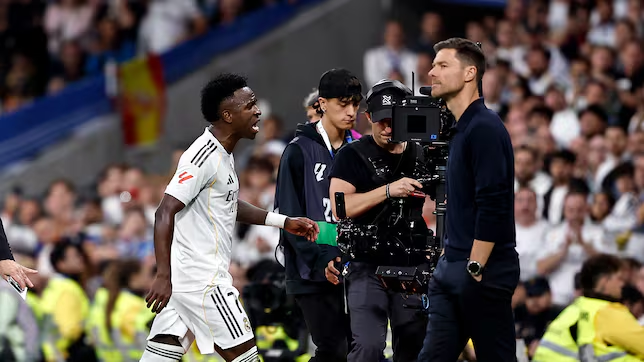
A public dressing-down of Alonso by Vinícius Júnior after a Clásico substitution left a stain on the coach’s authority. Even though Alonso later rebuilt that relationship and coaxed a top performance from the Brazilian, the damage to his standing with Pérez — who is desperate to secure Vinícius’s future at the club — was already done.
The Barcelona factor
In Madrid’s culture, certain defeats are unforgivable. Losing a big final to Barcelona carries symbolic weight that transcends league tables and tactical nuance. For a president who measures legacy in trophies and headlines, that loss was intolerable.
Scapegoating in a crisis
When Madrid produced dull, point-dropping displays against teams like Rayo Vallecano, Elche and Girona, and suffered home defeats to Manchester City and Celta Vigo, the hunt for blame zeroed in on the coach. Whether fair or not, the manager became the convenient lightning rod for systemic failures.
Failing to play the political game
Managing Real Madrid requires more than football acumen; it demands political savvy. Alonso’s career has been defined by independence and stature — a man who never had to flatter anyone. At the Bernabéu, that posture can be a liability. By the time he softened his media approach and tried to court favor, it was too late.
A giant who never bowed
Alonso’s CV reads like a hymn to footballing excellence: a decorated player at club and international level, and a coach who transformed Bayer Leverkusen into Bundesliga champions.
He has been venerated across Europe — at Liverpool, Real Sociedad, Bayern — and carried himself with the quiet confidence of someone who had earned the right to be uncompromising. That very dignity, however, clashed with the transactional, trophy-obsessed environment at Real Madrid.
A telling moment came in Jeddah when Alonso suggested a guard of honor for Barcelona.
Kylian Mbappé’s refusal to allow it, a public rebuke of Alonso’s authority, crystallized the fragile balance between coach, superstar and club image. It was damaging imagery at a moment when optics matter as much as outcomes.
The bigger picture is still unfixed
This is not the first time Pérez has cut a coach loose early in their tenure, and historically those decisions have sometimes preceded glittering success.
But sacking Alonso feels like a short-term fix that ignores long-term rot: a president desperate to cement his legacy, a squad of stars whose egos and contracts shape decisions, and a media ecosystem that amplifies pressure.
By handing the reins to Álvaro Arbeloa, Pérez has chosen continuity of control over structural reform. The real problems — recruitment strategy, squad balance, the stadium saga, and the culture of instant results, remain unresolved. Blaming the coach is tidy; solving the club’s deeper issues is hard.
Parting words for a fallen favorite
Xabi Alonso leaves with his reputation intact as a footballing mind and a leader who did more right than wrong.
He only partially contributed to the turmoil that ended his tenure. Real Madrid, as he always said, is different — and that difference can be unforgiving.
For now, the club moves on, but the question lingers: will another quick managerial change finally fix what ails the Bernabéu, or will it merely paper over problems that demand bolder, longer-term thinking?